Doesn’t everyone love new dinosaur news? Here’s the story of Dinevenator robustus, a newly named dinosaur from New Mexico.
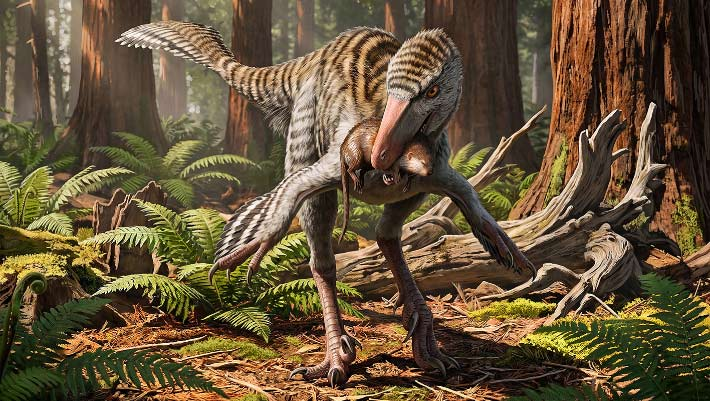
Dinevenator was a troodontid, meaning it belonged to a group of small-to-medium-sized theropod dinosaurs closely related to dinosaurs such as Troodon. If you can jog your memory way back, one of the main characters of Dinosaur Train was a Troodon! Troodontids are particularly interesting because they had relatively large brains compared with many other dinosaurs. Dinevenator lived around 73 million years ago during the Late Cretaceous, when what is now New Mexico looked very different from the dry landscape we see today. Instead, the region contained a warm, subtropical floodplain filled with dinosaurs.
What makes Dinevenator especially interesting is how little of it we actually have.
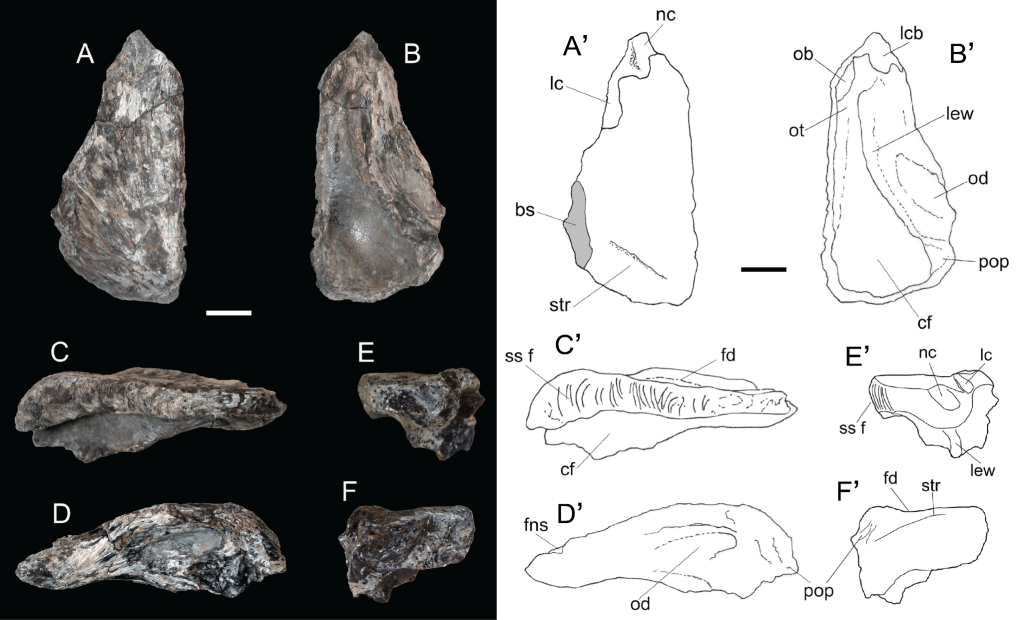
The dinosaur is currently known from a frontal bone, which forms part of the top of the skull. The fossil was originally discovered in New Mexico’s San Juan Basin in 2005. At first, it was thought to have come from a dromaeosaur, but later research showed that it was actually a troodontid. After scientists compared it with other troodontids discovered in North America, they noticed that the bone had several unusual characteristics. Most importantly, it was noticeably thicker and more robust than the equivalent bones of many related dinosaurs.
That eventually led researchers Steven Jasinski and Robert Sullivan to name the dinosaur Dinevenator robustus.
Researchers estimate that Dinevenator may have been around 8–10 feet long and weighed roughly 150–300 pounds, which would make it one of the larger known troodontids.
To me, the most interesting part of Dinevenator isn’t necessarily the dinosaur itself. It’s the fact that our understanding of dinosaurs can change because of one bone that was discovered more than twenty years ago. It shows that old fossils can produce new discoveries. The fossil itself was found in 2005. The dinosaur wasn’t formally named until more than two decades later. New fossils of related dinosaurs gave researchers better comparisons, allowing them to return to an old specimen and interpret it differently. So there are probably fossils sitting in museum collections right now that we don’t completely understand.
Sometimes you just have to look at an old bone again.
Citations:
 Dinodubskis
Leave a comment